Event entertainment planning guide for Texas events
- Wix Team legend
- Mar 6
- 11 min read


Planning entertainment for Texas weddings and corporate events demands more than choosing a playlist. Event planners face tight budgets, limited vendor availability, and clients expecting flawless execution. Without early coordination and strategic planning, even small oversights can derail guest satisfaction and damage your reputation. This guide walks you through timing, budgeting, vendor selection, and technical coordination to deliver entertainment that guests remember long after your event ends.
Table of Contents
Key takeaways
Point | Details |
Book early | Reserve entertainment vendors at least 6 months before your event date to ensure availability and better pricing. |
Budget strategically | Allocate 10-15% of total event spend to entertainment for quality results without overspending. |
Customize to audience | Match entertainment style to client goals and guest demographics for maximum engagement and satisfaction. |
Coordinate technical details | Allow 2-hour setup buffers and perform site walkthroughs to prevent delays and equipment failures. |
Measure success | Track guest retention and satisfaction metrics to evaluate entertainment impact and refine future events. |
Why entertainment planning matters for Texas events
Effective entertainment increases guest retention by an average of 40%, directly impacting how attendees perceive your event quality. When guests stay longer, they engage more deeply with your client’s brand message or celebration. Texas venues present unique challenges that demand thoughtful entertainment choices. Outdoor spaces in Austin require weather contingency plans, while Dallas convention centers need equipment that fills large rooms without overwhelming acoustics.
Cultural diversity across Texas cities means one-size-fits-all entertainment rarely works. Houston corporate events may lean toward sophisticated jazz ensembles, while Hill Country weddings often call for country and Tejano music mixes. Understanding these regional preferences helps you select entertainment that resonates with local audiences and keeps dance floors packed.
Methodical planning gives you leverage to negotiate better rates and secure top-tier vendors. Last-minute bookings force you to accept whatever remains available, often at premium prices with limited customization options. Early coordination also allows time to test equipment, finalize playlists, and rehearse transitions. For comprehensive guidance on tailoring entertainment to Texas celebrations, explore our wedding entertainment guide texas celebration.
Key planning priorities include:
Matching entertainment style to venue acoustics and space limitations
Building vendor relationships that support smooth day-of execution
Creating backup plans for equipment failures or weather disruptions
Aligning entertainment timing with event flow and guest energy levels
Prerequisites: what you need before you start
Successful entertainment planning starts with gathering critical information before contacting vendors. Confirm venue technical specifications including electrical capacity, sound system compatibility, and stage dimensions. Many Texas venues restrict equipment placement or require specific insurance coverage, and discovering these limitations after booking creates expensive complications.
Define your entertainment budget as 10-15% of total event spend to balance quality with financial constraints. A $50,000 wedding should allocate $5,000 to $7,500 for entertainment, while a $100,000 corporate gala might dedicate $10,000 to $15,000. This range covers professional DJ services, equipment rental, and setup labor without compromising other event elements.
Understand client goals through detailed discovery meetings. Ask about must-play songs, genres to avoid, and specific moments requiring entertainment coordination like cake cutting or award presentations. Collect guest demographic data including age ranges, cultural backgrounds, and mobility considerations. A corporate event with international attendees needs different music selection than a local wedding with mostly family guests.
Verify venue safety and compliance requirements to avoid legal issues. Texas venues often mandate liability insurance, fire marshal approvals for lighting installations, and noise ordinances that restrict volume after certain hours. Review event entertainment insurance texas requirements to protect your business and client investments.
Before finalizing any entertainment contracts, compile:
Venue floor plans with electrical outlet locations and load limits
Client entertainment preferences and absolute restrictions
Guest count and demographic breakdown for tailored selections
Timeline showing ceremony, reception, and entertainment transitions
Asking the right questions upfront prevents misunderstandings. Consider reviewing essential questions to ask contractors for communication frameworks that apply equally to entertainment vendors.
Step 1: planning and booking timeline
Booking entertainment at least 6 months in advance increases availability and negotiation power significantly. Popular Texas DJs and bands book weekend dates 8 to 12 months ahead during peak wedding season from April through October. Waiting until 90 days before your event leaves you competing for limited vendors who may lack the experience or equipment quality your client expects.
Align booking milestones with your event timeline to maintain momentum. Sign contracts and pay deposits at least 4 months out to secure your preferred vendors. Schedule venue walkthroughs 6 to 8 weeks before the event so entertainment providers can assess space limitations and plan equipment placement. Finalize playlists and special requests 3 to 4 weeks ahead, allowing time for vendors to source specific music or coordinate with other suppliers.
Include time buffers in your planning for unexpected delays. Vendors may need additional days to finalize contracts during busy seasons, and technical rehearsals often reveal issues requiring equipment adjustments. Building 2-week cushions between major milestones prevents rushed decisions that compromise quality.
Follow this booking sequence for optimal results:
Research and contact 3 to 5 entertainment vendors 6 to 9 months before your event date.
Schedule consultations to discuss client vision, venue requirements, and budget parameters.
Compare proposals and negotiate terms including cancellation policies and overtime rates.
Sign contracts and submit deposits 4 to 5 months out to lock in availability.
Conduct venue walkthroughs with selected vendors 6 to 8 weeks before the event.
Finalize playlists, special requests, and coordination details 3 to 4 weeks ahead.
Confirm setup times and technical requirements 1 week before event day.
Pro Tip: Create a shared calendar with your entertainment vendors showing all event milestones. This transparency reduces missed deadlines and keeps everyone aligned on expectations throughout the planning process.
For additional insights on coordinating Texas events effectively, review our wedding entertainment tips 2026 texas couples recommendations.
Step 2: budgeting for entertainment
Set your entertainment budget at 10-15% of total event spending to secure quality services without financial strain. A $60,000 wedding should allocate $6,000 to $9,000 for entertainment, covering DJ services, sound equipment, lighting, and additional features like photo booths or live musicians. Corporate events with larger budgets may increase this percentage for premium entertainment that reinforces brand positioning.
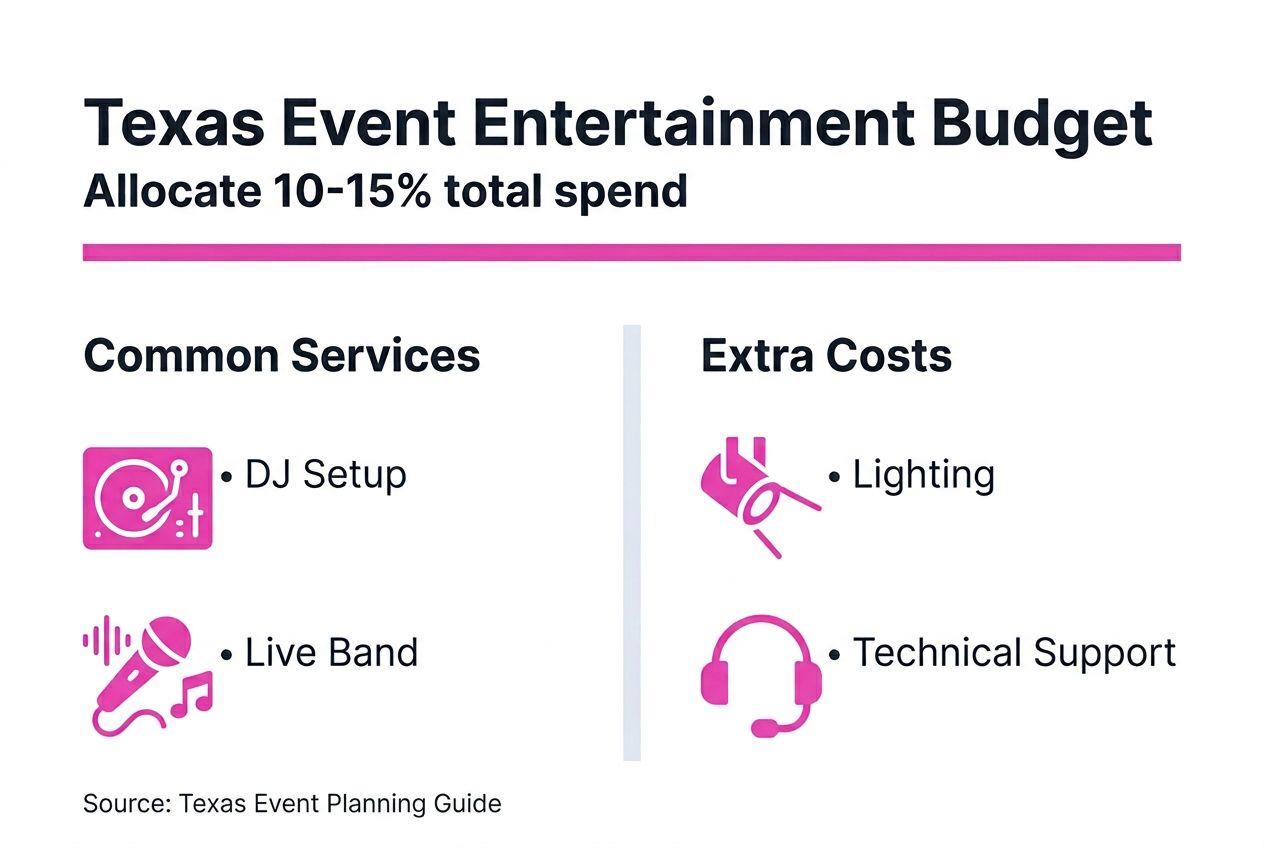
Understand local cost benchmarks to evaluate vendor proposals accurately. Average DJ service costs in Texas range from $1,000 to $3,000 depending on event length, equipment sophistication, and vendor experience. Entry-level DJs charging under $1,000 often lack backup equipment or professional liability insurance, creating risk exposure for your events. Premium DJs exceeding $3,000 typically include advanced lighting packages, multiple sound systems, or specialized services like bilingual MCing.
Service Component | Budget Range | Notes |
Professional DJ (4-6 hours) | $1,200-$2,500 | Includes mixing, MCing, basic lighting |
Sound system rental | $300-$800 | Varies by venue size and acoustics |
Lighting package | $400-$1,200 | Uplighting, spotlights, dance floor effects |
Additional equipment | $200-$600 | Wireless mics, backup speakers, generators |
Setup and breakdown | Included-$400 | Depends on complexity and vendor policy |
Include additional costs beyond base service fees when budgeting. Technical setup for large venues may require extra labor, power distribution equipment, or specialized rigging. Reserve 5-10% of your entertainment budget as contingency funds for last-minute adjustments like extended event hours or emergency equipment rentals.
Prioritize must-have entertainment features to maximize budget efficiency. Identify which elements directly impact client satisfaction and guest engagement, then allocate funds accordingly. A wedding reception prioritizes dance floor lighting and diverse music selection, while a corporate awards gala may emphasize presentation audio quality and sophisticated ambient lighting.
Pro Tip: Request itemized proposals from vendors showing exactly what each budget line covers. This transparency helps you compare quotes accurately and identify where you can adjust spending without sacrificing quality.
Explore our best wedding dj services 2026 guide for detailed pricing comparisons across Texas markets.
Step 3: customizing entertainment
Align entertainment style with event type and guest demographics for maximum engagement. Corporate events with executive attendees often require understated background music during networking, transitioning to energetic sets for after-dinner dancing. Wedding receptions need versatile DJs who can shift between romantic ballads for older guests and current hits that energize younger crowds.
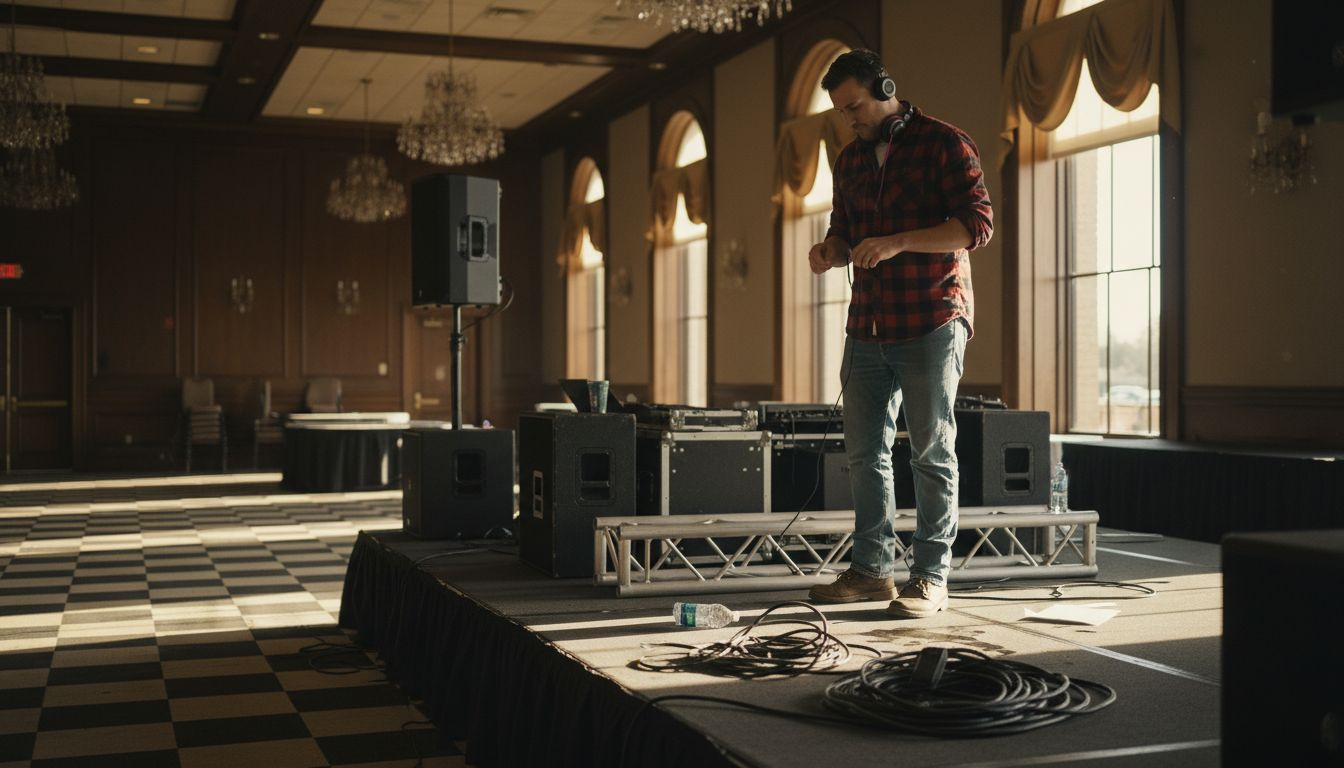
Consider alternative entertainment options beyond traditional DJs when client vision or venue characteristics suggest better fits. Live bands create authentic energy but require larger budgets and more complex technical setups. Photo booths provide interactive entertainment that doubles as guest favors through instant prints. String quartets or jazz trios work beautifully for cocktail hours but lack the versatility needed for full reception entertainment.
Communicate clearly with clients to refine entertainment goals before finalizing vendor contracts. Ask specific questions about moments requiring special attention, songs with emotional significance, and genres to avoid. Some clients want continuous music throughout their event, while others prefer silent breaks for speeches or meal service. Understanding these preferences prevents day-of conflicts and ensures entertainment matches expectations.
Match venue capabilities with chosen entertainment styles for smooth operations. Outdoor Texas venues often lack adequate electrical infrastructure for full DJ setups, requiring generator rentals or scaled-down equipment packages. Historic buildings may restrict volume levels or prohibit certain lighting installations due to preservation requirements. Verify these limitations during venue walkthroughs before committing to entertainment options.
Key customization considerations include:
Guest age ranges and cultural backgrounds influencing music preferences
Event formality level dictating entertainment presentation style
Venue acoustics requiring sound equipment adjustments
Timeline flow determining when to feature high-energy versus ambient entertainment
For detailed guidance on matching entertainment to your specific event needs, review our choosing event entertainment tips. Texas events benefit particularly from local DJs who understand regional preferences and venue characteristics.
Step 4: technical setup and coordination
Perform site walkthroughs with entertainment vendors at least 6 weeks before your event date. These visits reveal space constraints, electrical limitations, and acoustic challenges that influence equipment selection and placement. Walk through load-in paths to identify obstacles like narrow doorways or stairs requiring special handling for heavy speakers and lighting rigs.
Allow at least 2 hours buffer time for entertainment setup before guest arrival. Complex installations with multiple sound zones, wireless microphones, and elaborate lighting need adequate time for testing and troubleshooting. Rushing setup increases error risk and creates stress for your vendors, potentially affecting their performance quality during your event.
Create detailed coordination plans documenting vendor responsibilities, setup timing, and equipment specifications. Share these plans with all event stakeholders including venue managers, catering teams, and photography crews. Clear documentation reduces miscommunication that causes 20% of event failures and ensures everyone understands how entertainment integrates with other event elements.
Define vendor roles and responsibilities explicitly in your contracts and day-of timelines. Specify who provides power distribution equipment, who manages volume control during speeches, and who coordinates music transitions with ceremony or program moments. When multiple vendors share space or resources, assign a point person to resolve conflicts and maintain schedule adherence.
Essential technical coordination steps include:
Testing all audio equipment 24 hours before the event when possible
Creating backup plans for equipment failures including spare microphones and speakers
Coordinating entertainment timing with catering service and program transitions
Designating a staff member to communicate with vendors during the event
Proper lighting transforms Texas wedding venues and corporate spaces dramatically. Learn about event lighting types texas weddings use to create memorable atmospheres that complement your entertainment strategy.
Common mistakes and troubleshooting
Booking entertainment late causes vendor unavailability that forces you to accept subpar options or inflated pricing. Prime weekend dates during Texas wedding season fill 6 to 9 months in advance, leaving procrastinators with inexperienced DJs or vendors who juggle multiple events the same day. Reserve your entertainment vendors immediately after securing your venue to avoid this entirely preventable problem.
Underestimating setup time causes 30% of event delays that cascade into rushed programs and guest dissatisfaction. DJs need time to position speakers for optimal sound coverage, test wireless microphones, and program lighting sequences. Schedule entertainment setup to complete at least 30 minutes before guest arrival, building cushion for unexpected technical issues.
Poor communication causes over 20% of entertainment failures ranging from wrong song selections to missed ceremony cues. Create written agreements documenting every detail including do-not-play lists, special requests, and coordination timing. Schedule final confirmation calls 1 week before your event to review these details and address any last-minute questions.
Lacking contingency plans for equipment failures or no-show vendors can derail your entire event. Professional entertainment companies maintain backup equipment and substitute DJs, but budget vendors often operate without these safeguards. Verify your vendor’s contingency protocols during contract negotiations and consider booking backup options for mission-critical events.
Common pitfalls to avoid:
Failing to communicate venue restrictions to entertainment vendors
Skipping equipment testing before the event day
Overlooking power requirements for full entertainment setups
Not building buffer time between program elements
Revisit our choosing event entertainment tips for additional guidance on vendor selection criteria that minimize these common mistakes.
Expected outcomes and results
Guest retention at events can increase by 40% with effective entertainment that keeps attendees engaged throughout your program. Longer guest stays translate to more networking opportunities at corporate events and richer celebration experiences at weddings. When guests leave early, they miss key moments that justify your client’s investment and potentially damage your reputation as a planner.
Tailored entertainment raises guest satisfaction scores by approximately 25% compared to generic approaches. Customizing music selections to match demographic preferences, coordinating entertainment with event flow, and creating memorable interactive moments demonstrate attention to detail that clients and guests appreciate. Higher satisfaction generates positive reviews and referrals that grow your planning business.
Good coordination reduces technical errors and delays by over 35%, protecting event timelines and reducing stress for everyone involved. When entertainment vendors complete setup on schedule, test equipment properly, and communicate effectively with your team, programs flow smoothly without awkward gaps or rushed transitions.
Success Metric | Expected Improvement | Measurement Method |
Guest retention time | 40% increase | Compare average stay duration to similar events |
Satisfaction scores | 25% improvement | Post-event surveys rating entertainment quality |
Technical delays | 35% reduction | Track setup completion times and incident reports |
Referral rates | 15-20% increase | Monitor booking inquiries mentioning entertainment |
Successful entertainment enhances your overall reputation as an event planner who delivers exceptional experiences. Clients remember flawless execution and enthusiastic guest responses, making them more likely to recommend your services and book you for future events. Building relationships with reliable entertainment vendors creates competitive advantages that differentiate your business in crowded Texas markets.
Understanding user engagement importance helps you apply these metrics effectively to measure and improve entertainment outcomes. For broader context on engagement principles, review this external resource on user engagement importance.
Explore expert entertainment services for your Texas event
Transforming entertainment planning from stressful to seamless requires partnering with experienced professionals who understand Texas venues and diverse client needs. Urban Space Entertainment offers tailored DJ and party services designed specifically for weddings and corporate events throughout Texas, bringing proven expertise to every celebration.
Professional entertainment services ensure seamless coordination through dedicated planning consultations, venue walkthroughs, and day-of management that lets you focus on other event elements. Expert DJs read crowd energy and adapt playlists in real time, creating organic flow that keeps guests engaged from cocktail hour through final dance.
Explore our ultimate wedding party services designed for Texas celebrations, or discover comprehensive solutions at our expert DJ services texas homepage. Partner with professionals who transform your entertainment vision into unforgettable experiences that guests talk about long after your event ends.
Frequently asked questions about event entertainment planning in Texas
How far in advance should I book entertainment for a Texas event?
Book entertainment vendors at least 6 months before your event date to ensure availability of quality professionals. Peak wedding season from April through October fills even earlier, often requiring 8 to 12 months advance booking. Corporate events scheduled during holiday seasons also need extended lead times.
What percentage of the event budget should go to entertainment?
Allocate 10-15% of your total event budget to entertainment for quality results. A $50,000 wedding should dedicate $5,000 to $7,500, while larger corporate events may adjust this percentage based on entertainment’s role in achieving event objectives. This range covers professional DJ services, equipment, and setup costs.
How do I choose entertainment that fits diverse guest demographics?
Consult with your client to understand guest age ranges, cultural backgrounds, and music preferences. Professional DJs build versatile playlists that transition smoothly between genres, satisfying multiple demographic groups throughout the event. Request sample playlists from vendors showing how they accommodate diverse audiences.
What are key steps to avoid technical issues on event day?
Schedule venue walkthroughs with entertainment vendors 6 to 8 weeks before your event to identify electrical, space, and acoustic limitations. Allow at least 2 hours for equipment setup and testing before guest arrival. Confirm backup equipment availability and create contingency plans for common failures.
How can I measure if the entertainment was successful?
Track guest retention time compared to similar events, aiming for the 40% improvement effective entertainment typically delivers. Distribute post-event surveys asking attendees to rate entertainment quality and engagement. Monitor how many guests stay through final dances and participate actively on dance floors throughout the reception.
Recommended
Comments