Event Lighting Explained: 4 Types Transform Texas Weddings
- Wix Team legend
- Feb 28
- 10 min read

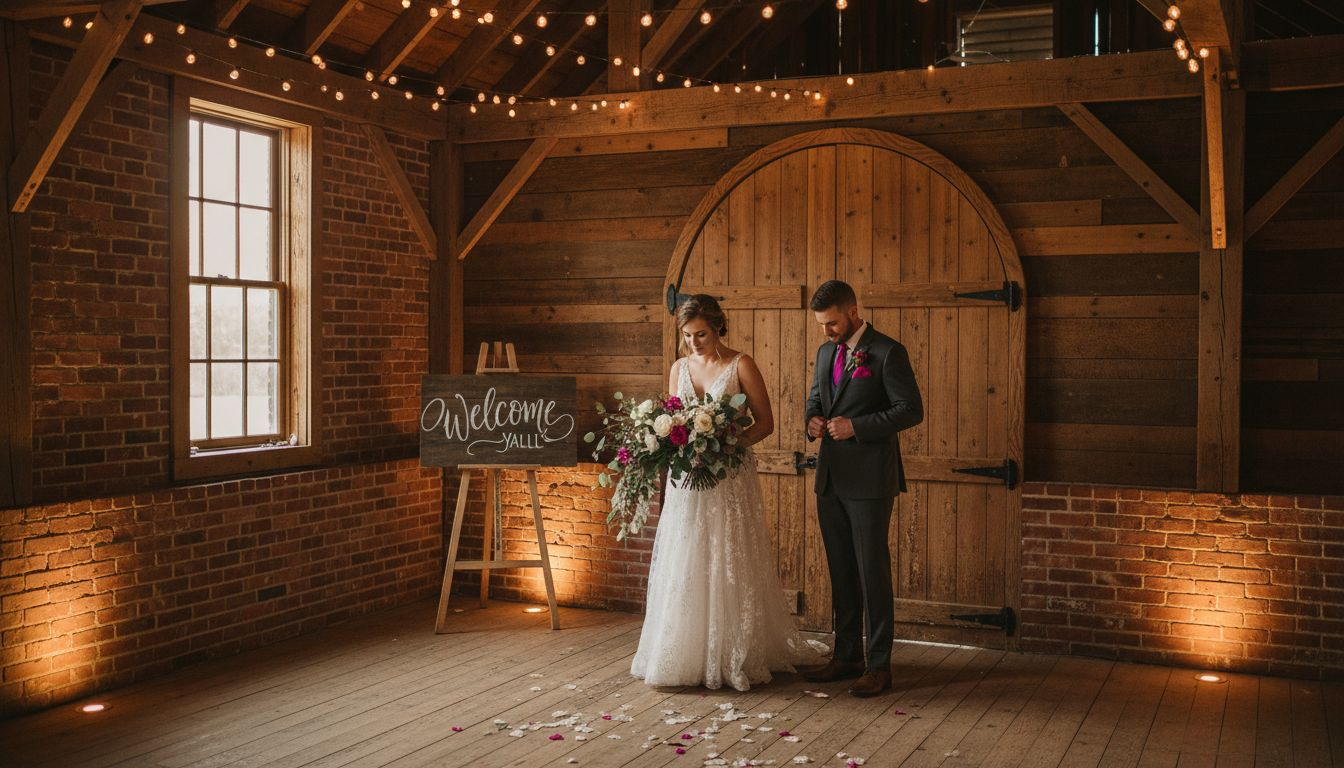
Most Texas couples believe natural light and candles create perfect wedding ambiance. This misconception leads to dimly lit receptions with unflattering photos and lackluster atmosphere. Professional event lighting transforms venues dramatically, enhancing mood, guest experience, and photography quality. This guide clarifies lighting types, venue considerations, and budgeting strategies to help you design memorable wedding illumination confidently.
Table of Contents
Key Takeaways
Point | Details |
Four lighting types combine | Ambient, task, accent, and decorative lighting work together to transform wedding spaces effectively |
Texas outdoor weddings demand weatherproofing | Moisture-rated fixtures and flexible technology ensure durability and safety in outdoor Texas settings |
Layering enhances mood and function | Strategic lighting combinations create depth while meeting practical guest needs throughout event phases |
Budget 10-15% of total costs | Allocating this percentage balances quality lighting impact with overall wedding expenses |
Understanding the Role of Event Lighting in Weddings
Lighting shapes how guests perceive your venue from the moment they arrive. What looks elegant in daylight can appear dull or uninviting after sunset without proper illumination. Professional uplighting creates depth and ambiance improving visual media quality substantially, a crucial factor in modern wedding documentation.
The live event rental market reflects growing recognition of lighting’s importance of event lighting in creating memorable celebrations. Couples increasingly understand that strategic illumination elevates their investment in florals, decor, and venue selection.
Effective lighting accomplishes several critical functions:
Highlights key moments like first dances and cake cutting with dramatic focus
Accentuates architectural features and floral arrangements that might otherwise fade into shadows
Creates emotional atmosphere matching ceremony solemnity or reception energy
Ensures flattering tones for enhancing photography and videography throughout your event
Pro Tip: Visit your venue after dark to see actual evening conditions. Natural light disappears completely, revealing why professional lighting becomes essential for Texas weddings starting at 6 PM or later.
Poor lighting undermines even the most beautiful venues. Harsh overhead fluorescents create unflattering shadows on faces. Inadequate illumination makes guests feel disconnected from the celebration. Dark corners reduce the usable space you paid for, while inconsistent lighting creates choppy, amateur-looking photographs that disappoint for years.
Types and Functions of Wedding Lighting
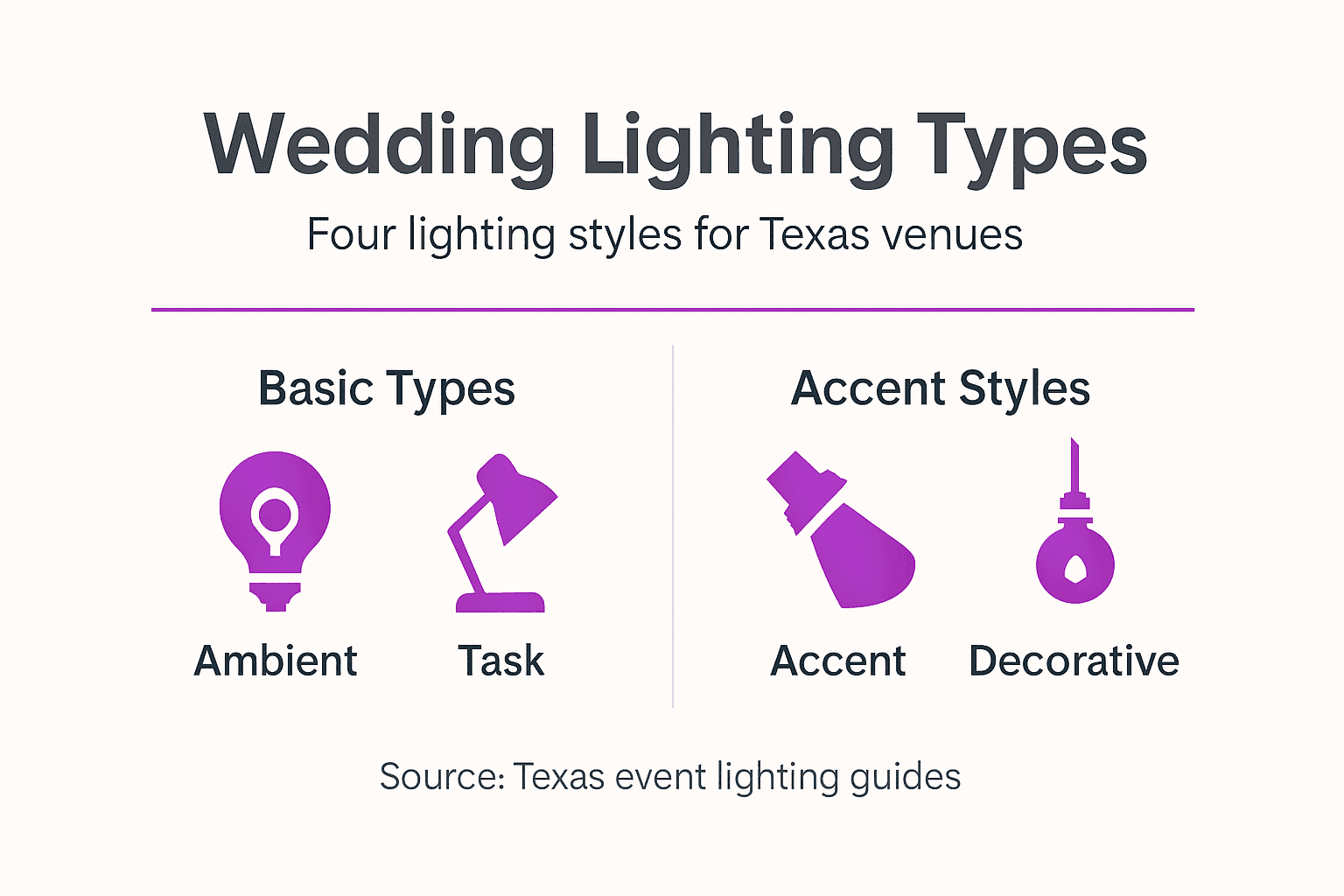
Understanding the four fundamental types of event lighting empowers you to design comprehensive illumination plans. Each type serves distinct purposes, and combining them creates both functional and atmospheric balance.
Ambient lighting provides overall illumination ensuring guest safety and comfort. Soft, even light from uplights or wash fixtures creates the base layer. This general illumination prevents accidents and allows guests to navigate spaces confidently without harsh brightness.
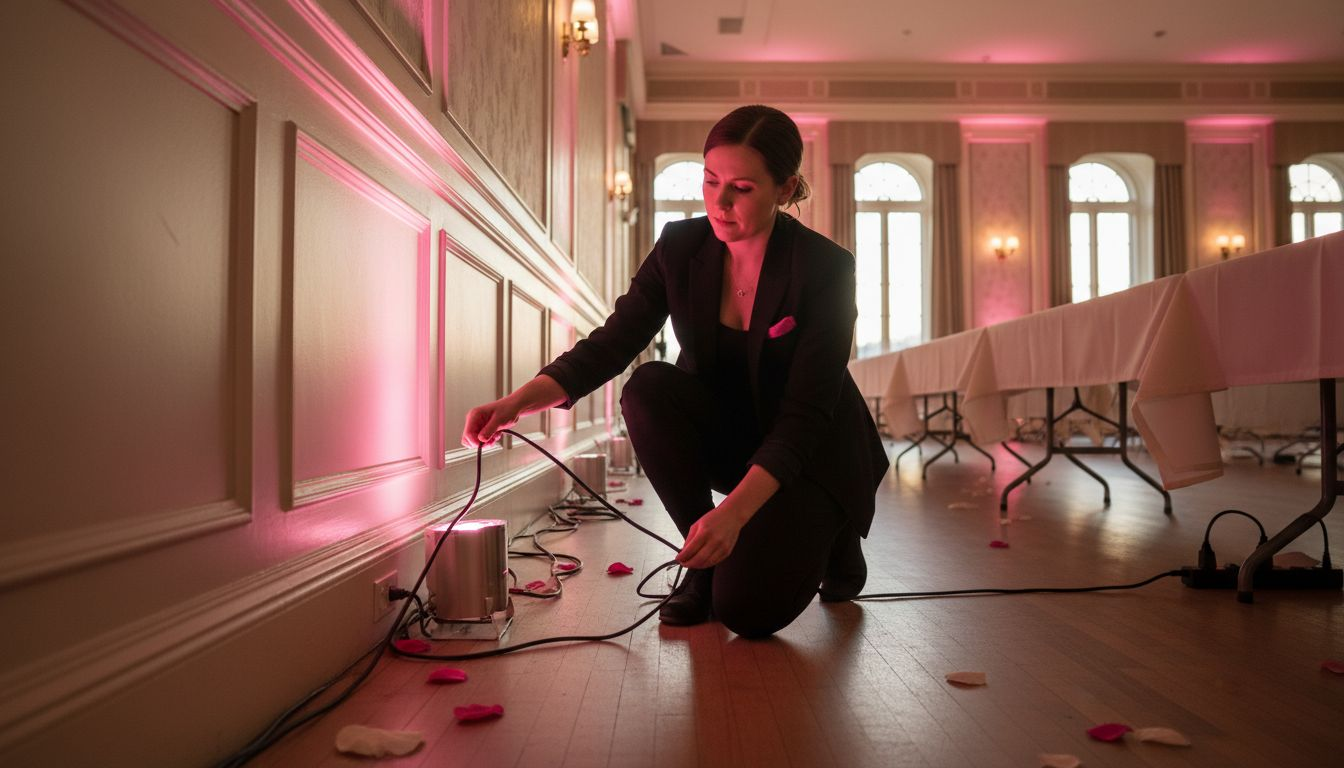
Task lighting focuses on functional areas requiring visibility. Dining tables need adequate light for meals without being overly bright. Stage areas demand sufficient illumination for toasts and speeches. Buffet stations require clear visibility for food selection.
Accent lighting adds drama by highlighting specific elements. Spotlights draw attention to floral centerpieces, architectural columns, or wedding cakes. These focused beams create visual interest and depth, making decor investments more impactful.
Decorative lighting establishes mood through color, pattern, and effect. String lights, gobos projecting monograms, and color-changing LEDs transform plain spaces into themed environments matching your vision.
Lighting Type | Primary Function | Common Fixtures | Best Used For |
Ambient | Overall illumination | Uplights, wash lights | Base layer, safety |
Task | Functional visibility | Pin spots, table lamps | Dining, stages |
Accent | Highlighting features | Spotlights, narrow beams | Decor, cake, architecture |
Decorative | Mood and theme | String lights, gobos, color LEDs | Atmosphere, personalization |
Pro Tip: Design lighting in layers rather than relying on one type. Start with ambient base, add task lighting for function, then layer accent and decorative elements for visual impact.
Layering these types creates sophisticated environments. Ceremony spaces need soft ambient lighting with accent spots on the altar. Cocktail hours benefit from decorative color washes and accent lighting on bars. Reception spaces require task lighting for dining, then transition to vibrant decorative effects for dancing.
Venue-Specific Lighting Considerations for Texas Weddings
Texas wedding venues present unique challenges requiring tailored lighting approaches. Outdoor spaces dominate the Texas wedding landscape, from Hill Country vineyards to ranch settings. Outdoor wedding lighting requires weatherproof fixtures with appropriate IP ratings to handle humidity, potential rain, and temperature fluctuations.
Indoor venues often feature beautiful architecture but limited electrical infrastructure. Historic buildings may restrict mounting options or have outdated wiring unable to support modern lighting loads. Barn venues offer rustic charm but minimal existing illumination and challenging rigging points.
Modern technology solves many venue limitations:
LED fixtures consume less power, allowing more lights per circuit without overloading
Wireless battery-powered uplights eliminate extension cord hazards and placement restrictions
Lightweight equipment mounts on existing structures without permanent installation
Color-changing technology provides multiple looks from single fixture setups
Texas summer heat affects equipment performance and guest comfort. Fixtures generate warmth, so positioning matters for outdoor events. Battery-powered lights offer flexibility for remote areas without generator noise disrupting ceremonies. LED technology produces less heat than traditional bulbs, improving comfort near guest areas.
Balancing aesthetics with venue constraints requires creative problem solving. Tenting outdoor spaces allows controlled lighting design similar to indoor venues. Strategic fixture placement compensates for architecture that blocks ideal positions. Collaborating with venue coordinators early identifies electrical capacity, rigging options, and restrictions before finalizing lighting plans.
Common Misconceptions and Pitfalls in Wedding Lighting
Many couples underestimate lighting needs, leading to disappointing results. Common venue lighting is often insufficient for evening weddings causing poor ambiance and undesirable color tones. Understanding frequent mistakes helps you avoid them.
Relying on natural light alone represents the biggest miscalculation. Sunset timing varies seasonally, and Texas evenings darken quickly. Natural light disappears completely after twilight, leaving venues dependent on artificial sources. Planning for adequate professional lighting prevents dark, unwelcoming spaces.
Overestimating candle effectiveness disappoints couples expecting romantic glow. Candles provide minimal ambient light, creating small pools of illumination surrounded by shadows. They produce uneven lighting that photographs poorly and fails to illuminate guest faces adequately.
Ignoring existing venue lighting quality causes color and mood problems:
Standard fluorescent fixtures cast unflattering yellow or green tones that distort decor colors
Overhead lights create harsh shadows under eyes and chins, producing unflattering photographs
Insufficient intensity leaves spaces feeling dim and guests struggling to see
Single-source lighting flattens dimensional spaces, eliminating depth and visual interest
Pro Tip: Request your venue turn off standard overhead lighting during your event. Professional lighting creates far superior results than mixing it with unflattering existing fixtures.
Underbudgeting for professional lighting forces compromises that diminish overall impact. DIY attempts rarely achieve professional quality and consume valuable planning time. Inadequate lighting undermines investments in photography, videography, florals, and venue rental.
“The difference between amateur and professional lighting becomes obvious in photographs. Proper illumination transforms ordinary spaces into magazine-worthy settings while poor lighting makes even luxury venues appear dull.”
Last-minute lighting planning limits options and increases costs. Popular equipment books months ahead, and rushed decisions prevent proper integration with other vendors. Early planning allows coordination with photographers, DJs, and planners for cohesive results.
Layering Lighting for Atmosphere and Function
Layering lighting enhances spatial depth and creates sophisticated environments adapted throughout ceremony, dinner, and dancing phases. Strategic combinations meet practical needs while building emotional atmosphere matching each event moment.
Start with ambient lighting as your foundation. Uplights positioned around the perimeter create soft, even base illumination. This layer ensures safety and visibility without harsh brightness. Warm white tones typically work best for ambient layers, creating inviting atmosphere.
Add task lighting where function demands it. Pin spots over dining tables provide adequate light for meals without overpowering ambiance. Stage lighting ensures speakers and performers remain visible. These functional elements integrate subtly, supporting activities without drawing attention to themselves.
Accent lighting creates visual interest by spotlighting key elements. Narrow beam spotlights on floral arrangements make them pop. Grazing light across textured walls adds dimension. Highlighting your cake table ensures this focal point commands attention.
Decorative lighting establishes mood and personalizes spaces. Color washes transform plain walls into dynamic backdrops matching your palette. Gobo projections add monograms or patterns. String lights create enchanting overhead canopies.
Event Phase | Primary Lighting | Secondary Effects | Mood Goal |
Ceremony | Soft ambient, accent on altar | Aisle lighting, subtle color | Intimate, focused |
Cocktail Hour | Moderate ambient, accent on bars | Decorative color washes | Social, relaxed |
Dinner | Task lighting on tables, ambient | Accent on cake, centerpieces | Warm, conversational |
Dancing | Reduced ambient, dynamic effects | Color changes, movement | Energetic, celebratory |
Programmed transitions adapt lighting as your event progresses. Ceremony lighting stays soft and focused. Cocktail hour brightens slightly encouraging mingling. Dinner lighting balances visibility with intimacy. Dancing transforms completely with vibrant colors and dynamic effects elevating energy.
Synchronize lighting changes with timeline milestones for seamless flow
Gradually transition between scenes rather than abrupt switches
Maintain some consistent elements like accent lighting while changing mood layers
Test all transitions during setup to ensure smooth operation
Coordinating Lighting with Entertainment
Integrating lighting with your DJ or live music amplifies atmosphere and creates cohesive experiences. Music and illumination work together, each enhancing the other’s impact on guest engagement and celebration energy.
Properly lit stages and performance areas ensure entertainers remain visible and professional. Inadequate lighting makes DJs and bands fade into backgrounds, diminishing their presence. Strategic illumination creates focal points that naturally draw attention during key moments.
Dance floor lighting directly influences guest participation. Dynamic effects synchronized with music tempo encourage movement and create excitement. Static or dim lighting leaves dance floors feeling empty and uninviting. Color changes matching song energy shift the room’s entire vibe.
Collaboration between lighting designers and entertainment teams ensures seamless execution:
Share event timeline details so lighting cues match song selections and announcements
Coordinate spotlight usage for introductions, first dance, and special moments
Program lighting scenes that complement music genre and tempo changes
Establish communication methods for real-time adjustments during the event
Many professional DJs offer event lighting and entertainment coordination as integrated services. This streamlines planning and guarantees synchronized execution. Single vendors handling both elements eliminate coordination gaps between separate providers.
Timing matters significantly for maximum impact. Grand entrance lighting should trigger precisely as you enter. First dance spotlights focus attention at the perfect moment. Cake cutting illumination highlights this tradition beautifully. Find additional lighting coordination tips from experienced entertainment professionals.
Budgeting and Cost-Effectiveness in Wedding Lighting
Typical lighting budgets represent around 10-15% of total event costs with rentals and professional consultations helping avoid overspending. Understanding realistic costs and prioritization strategies helps couples achieve beautiful results without financial strain.
Allocate your lighting budget strategically:
Prioritize areas where guests spend most time, like reception spaces over isolated corners
Invest in lighting that impacts photography quality, since photos preserve memories permanently
Focus on ambient and accent lighting before decorative extras if budget constrains choices
Consider which effects create maximum visual impact for investment level
Renting equipment proves more cost effective than purchasing. Professional-grade fixtures cost thousands, and you need multiple units for proper coverage. Rental companies maintain equipment, handle setup and breakdown, and provide expertise ensuring optimal results. This approach eliminates storage concerns and upgrade costs as technology advances.
Hiring professionals saves money despite seeming counterintuitive. Experienced lighting designers maximize impact from fewer fixtures through strategic placement. They prevent costly mistakes like inadequate power planning or incompatible equipment. Their efficiency reduces labor time and prevents rental extensions from setup problems.
“Couples who attempt DIY lighting often spend similar amounts on purchased equipment while achieving inferior results. Professional services include design expertise, quality equipment, setup, and troubleshooting that DIY approaches cannot match.”
Planning early provides cost advantages. Last-minute bookings face limited availability and premium pricing. Early consultation allows designers to propose solutions fitting your budget rather than working backward from expensive defaults. Review wedding entertainment budget tips and budgeting for wedding lighting to optimize allocation across all entertainment elements.
Transparency about budget limitations helps vendors propose appropriate solutions. Lighting companies can scale designs to match financial parameters while maintaining quality and impact in priority areas.
Latest Technologies and Solutions for Venue Challenges
Advances in lighting technology, including LED systems and wireless battery-powered lights, provide flexibility for venues with unique power or rigging limitations. Modern innovations solve practical problems while expanding creative possibilities for Texas wedding lighting.
LED fixtures revolutionized event lighting through multiple advantages. They consume 75% less power than traditional bulbs, allowing more fixtures per electrical circuit. LEDs generate minimal heat, improving comfort near guest areas. Color-changing LEDs provide infinite palette options from single fixtures, eliminating the need for gels or multiple colored lights.
Wireless battery-powered uplights eliminate extension cord hazards and placement restrictions. These fixtures operate 8-12 hours on single charges, covering entire events reliably. Remote control allows color and intensity adjustments without accessing individual units. Battery technology proves ideal for outdoor Texas weddings where power access limits design options.
Creative mounting solutions adapt to challenging architecture:
Truss systems create overhead rigging points in venues lacking permanent infrastructure
Magnetic mounts attach fixtures to metal surfaces without drilling or damage
Weighted bases stabilize uplights on uneven outdoor terrain
Clamps secure lights to existing structures like tent poles or railings
Smart lighting control systems enable sophisticated programming through user-friendly interfaces. Designers create multiple scenes triggered by simple button presses or automated timelines. Wireless DMX control eliminates cable runs between fixtures and controllers, simplifying setup in sprawling venues.
These modern lighting technologies make professional-quality illumination achievable in virtually any Texas wedding venue. Historic buildings, remote ranches, tented fields, and contemporary ballrooms all benefit from flexible, powerful lighting solutions adapted to their unique characteristics.
Enhance Your Wedding with Expert DJ and Lighting Services
Transforming your Texas wedding venue through professional lighting and entertainment creates unforgettable experiences for you and your guests. Expert coordination ensures every moment shines beautifully while music and illumination work together seamlessly.
Urban Space Entertainment provides comprehensive professional DJ services for weddings paired with expert event lighting solutions tailored specifically for Texas celebrations. Our experienced team handles everything from ceremony through reception, coordinating music, lighting, and timeline execution flawlessly. Explore our ultimate wedding party package designed to deliver complete entertainment and lighting services for your special day.
Frequently Asked Questions
What type of lighting is best for Texas outdoor evening weddings?
Weatherproof LED uplighting and wireless battery-powered fixtures provide durability and placement flexibility essential for outdoor Texas venues. Layer ambient lighting for guest safety with accent lights highlighting key decor elements and architectural features creating depth and visual interest.
How can I avoid overspending on wedding lighting?
Allocate 10-15% of your total wedding budget specifically for lighting and utilize rental services rather than purchasing equipment. Prioritize illumination in areas where guests congregate and photographs happen most, like reception spaces, dance floors, and ceremony focal points.
Can lighting really improve wedding photos?
Yes, professional uplighting and layered lighting dramatically enhance photograph quality by improving color accuracy, eliminating harsh shadows, and adding dimensional depth. Proper illumination highlights venue architectural features and ensures flattering skin tones throughout your wedding documentation.
Should lighting be coordinated with the DJ or band?
Absolutely, synchronizing lighting cues with music transitions elevates atmosphere significantly and boosts guest engagement throughout your celebration. Coordinate timing, spotlight usage, and dynamic effects before the event with your entertainment team ensuring seamless flow between ceremony, dinner, and dancing phases.
What common lighting mistakes should I avoid?
Avoid relying exclusively on natural light or candles, which provide inadequate illumination after sunset causing dim, unflattering environments. Don’t ignore outdated venue lighting that creates poor color casts and harsh shadows. Always plan for layered professional lighting designed specifically for wedding atmosphere and photographic quality.
Recommended
Comments