Party DJ Checklist 2026: Avoid 40% Event Disruptions
- Wix Team legend
- Mar 2
- 11 min read

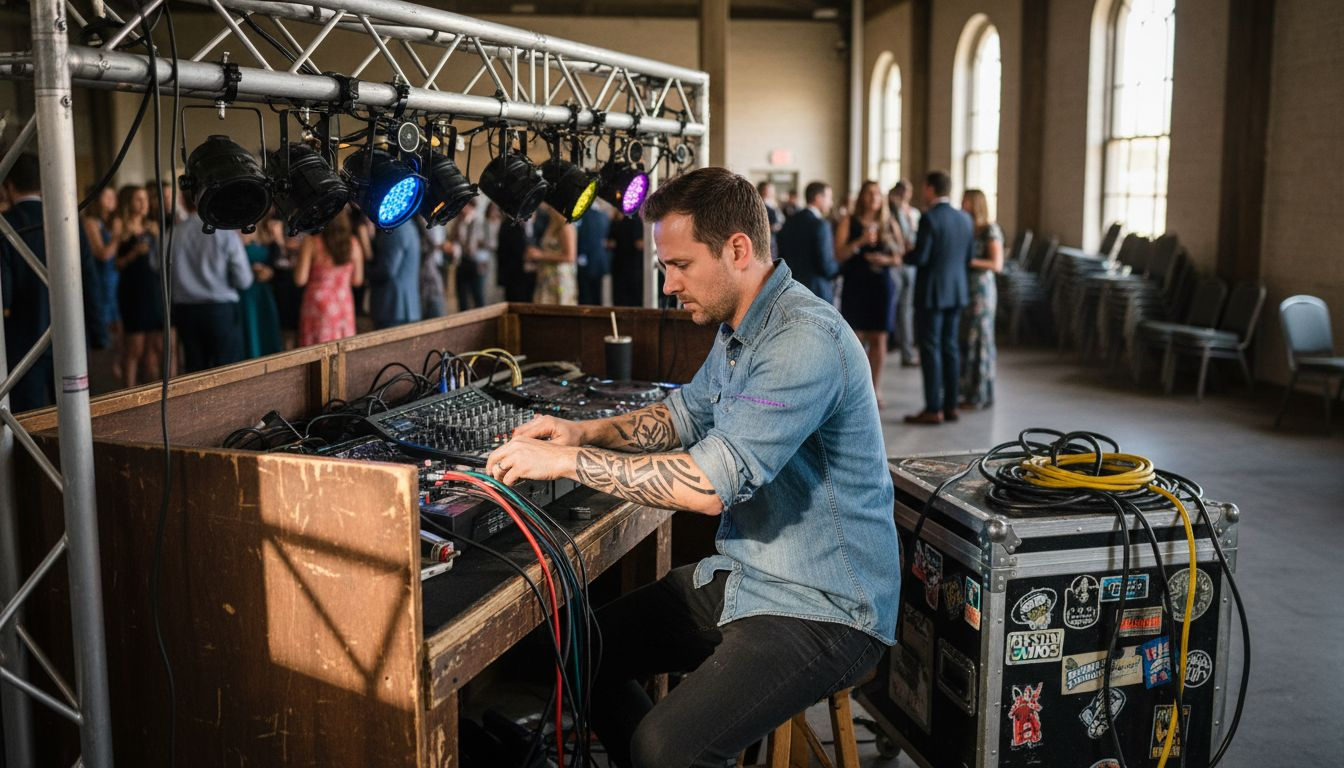
Planning a Texas event can quickly become stressful when DJ bookings fall through or technical issues arise. Research shows 40% of event disruptions stem from last-minute DJ booking and poor preparation, leaving hosts scrambling to salvage their celebrations. This comprehensive checklist empowers you to hire professional DJs confidently, coordinate seamlessly, and deliver unforgettable entertainment experiences across Texas.
Table of Contents
Key Takeaways
Point | Details |
Early Booking | Booking DJs 8+ weeks in advance significantly reduces disruption risk and ensures availability. |
Equipment Backup | Essential gear with backup systems prevents technical failures that compromise entertainment quality. |
Custom Playlists | Tailored music selections aligned with guest preferences boost satisfaction and engagement. |
Clear Contracts | Detailed agreements and open communication streamline planning and set clear expectations. |
Contingency Plans | Backup equipment, alternate contacts, and digital playlist copies minimize last-minute chaos. |
Why a Detailed DJ Checklist Matters for Texas Events
Texas hosts weddings, corporate galas, and celebrations that span intimate gatherings to large-scale productions. Each event type demands different equipment, music styles, and venue coordination. Without a structured approach, you risk mismatched expectations, technical failures, and disappointed guests.
A comprehensive checklist reduces last-minute issues and improves event flow by aligning your vision with DJ capabilities from day one. It creates accountability touchpoints throughout the planning process, ensuring both parties understand responsibilities, timelines, and deliverables. This systematic approach transforms entertainment from a potential weak point into your event’s highlight.
Texas venues present unique challenges:
Outdoor spaces require weather contingencies and power solutions
Historic buildings may have sound restrictions or equipment limitations
Large ranch venues demand powerful systems and careful acoustic planning
Urban locations need noise ordinance compliance and parking coordination
“Proper preparation through detailed checklists transforms entertainment from an afterthought into the centerpiece that guests remember long after your event ends.”
Reliability becomes your competitive advantage when hiring DJs for high-stakes events. A professional DJ checklist essentials framework ensures nothing falls through the cracks, from initial contact through final breakdown. You gain confidence knowing backup plans exist for every potential failure point.
Prerequisites: What You Need Before Hiring a DJ
Successful DJ partnerships start with groundwork before you ever contact vendors. Gather critical information that shapes your search and enables productive conversations with potential DJs.
Establish your entertainment budget early, including a 10-15% contingency for overtime or special requests. Texas DJ services vary widely in pricing based on experience, equipment quality, and event duration. Knowing your limits prevents wasted time exploring options beyond your reach.
Collect detailed venue specifications:
Available electrical power and outlet locations
Existing sound systems and compatibility requirements
Performance space dimensions and ceiling heights
Load-in access points and setup time windows
Noise restrictions or curfew requirements
Understand your guest demographics deeply. Age ranges, cultural backgrounds, and musical preferences inform playlist development and equipment needs. A corporate cocktail hour demands different preparation than a quinceañera or country-themed wedding reception.
Shortlist DJs with proven Texas experience. Local professionals understand venue quirks, weather patterns, and regional music preferences. Review portfolios, read testimonials, and verify they’ve successfully handled events similar to yours. Check DJ booking preparation tips to streamline your vendor research process.
Step 1: DJ Booking and Contract Essentials
Timing makes the difference between securing top talent and settling for available options. Studies confirm booking a DJ at least 8 weeks in advance is recommended for optimal availability and preparation time. Popular dates during Texas wedding season (October through May) require even earlier commitments.
Initial contact should include your event date, location, guest count, and entertainment vision
Request detailed proposals outlining services, equipment, timeline, and pricing
Schedule consultations with top candidates to assess personality fit and professionalism
Negotiate contract terms covering setup duration, performance length, overtime rates, and cancellation policies
Secure your date with a deposit and signed agreement
Your contract must address critical details beyond basic service provision. Specify exactly what equipment the DJ provides versus what you’re renting separately. Include backup gear requirements, arrival times, and breakdown procedures. Address playlist customization processes, special announcement responsibilities, and coordination with other vendors.
Pro Tip: Request a clause guaranteeing a qualified substitute if your primary DJ faces emergencies. This protection ensures your event proceeds smoothly regardless of unforeseen circumstances.
Maintain regular communication throughout your planning timeline. Schedule check-ins at 6 weeks, 3 weeks, and 1 week before your event. These touchpoints confirm logistics, finalize playlists, and address any venue changes or special requests. Clear communication prevents misunderstandings that lead to day-of complications. Follow the complete DJ booking process guide for a structured approach. Understanding the recommended DJ booking timeline helps you stay on track throughout the process.
Step 2: Pre-Event Planning and Communication
Detailed planning transforms good events into exceptional experiences. Research shows DIY DJ checklist templates improve organizer efficiency by approximately 30% by creating structured workflows and accountability systems.
Use comprehensive checklist templates to track every task from booking through breakdown. Digital tools allow real-time updates, vendor access, and automatic reminders. Your checklist should cover equipment verification, playlist development, venue coordination, and contingency planning.
Gather music preferences early and thoroughly:
Create shared playlists for must-play songs and absolute no-play requests
Identify special moments requiring specific songs (first dance, cake cutting, grand entrance)
Discuss overall vibe and energy progression throughout the event
Consider guest demographics and cultural traditions
Coordinate venue logistics with both your DJ and venue manager. Confirm load-in times, parking access, and setup space availability. Verify power requirements match venue capabilities. Discuss sound level restrictions and how they impact equipment choices.
Pro Tip: Schedule a venue walkthrough with your DJ 2-3 weeks before the event. This site visit reveals acoustic challenges, identifies optimal equipment placement, and builds confidence in your technical setup.
Maintain open communication channels for last-minute adjustments. Wedding party changes, timeline shifts, or weather contingencies often require quick decisions. Establish preferred contact methods and response time expectations. Access comprehensive planning tips and checklist templates to organize your preparation process. Download professional DJ checklist templates to ensure nothing gets overlooked.
Step 3: Essential DJ Equipment and Backup Setup
Technical preparation separates memorable events from disappointing failures. Professional DJs arrive with primary systems and comprehensive backup equipment to guarantee uninterrupted entertainment.
Core equipment requirements:
Professional-grade speakers with adequate power for venue size
Mixing console with multiple input channels
Microphones for announcements and toasts
Lighting package appropriate for venue and event style
Laptop or controller with professional DJ software
Cable management and power distribution systems
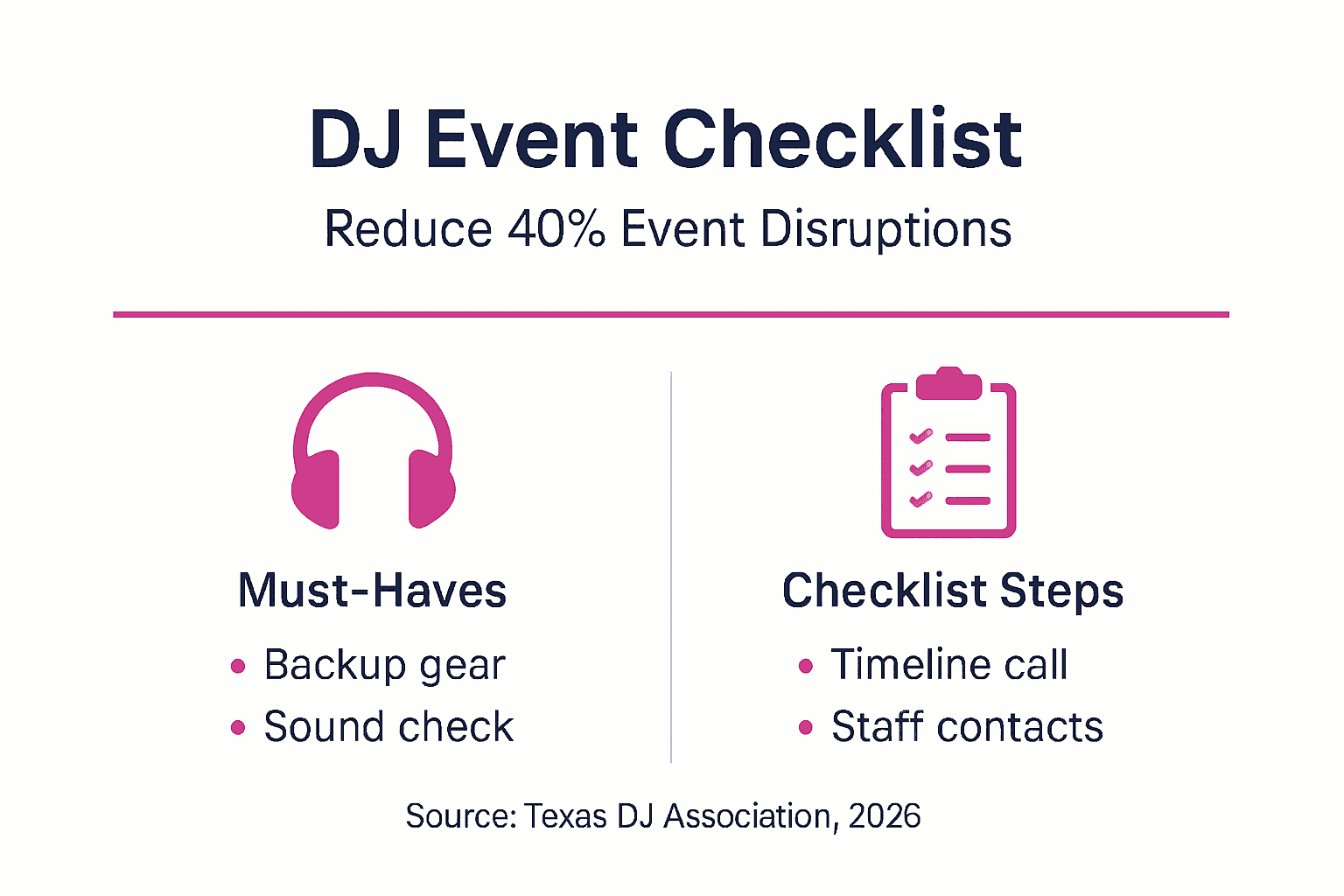
Critical backup items include backup USBs, headphones, microphones, earplugs, and multitools according to industry standards. Experienced professionals carry redundant systems for every potential failure point. A second laptop, spare cables, backup microphones, and emergency lighting prevent single-point failures from derailing your event.
Equipment Category | Primary System | Backup Requirements |
Sound | Main speakers, subwoofer, mixer | Backup mixer, spare cables, extra speakers |
Music Source | Primary laptop with software | Secondary laptop, USB drives with full playlist |
Microphones | Wireless mic system | Wired backup mics, extra batteries |
Power | Main power distribution | Surge protectors, extension cords, power strips |
Pre-event sound checks catch compatibility issues before guests arrive. Research confirms pre-checking venue sound systems reduces 25% of technical failures by identifying problems early. Schedule setup time allowing thorough testing of all equipment, acoustic adjustments, and lighting programming.
Pro Tip: Request your DJ arrive 2-3 hours before guest arrival for complete setup and testing. This buffer absorbs unexpected challenges without impacting your event timeline.
Verify adequate lighting for DJ booth visibility and guest safety. Texas outdoor venues may require supplemental lighting as natural light fades. Confirm your DJ understands venue-specific requirements and has appropriate solutions. Review Texas DJ equipment standards for regional best practices. Consult professional DJ gear essentials for comprehensive equipment lists. Learn venue sound system compatibility tips to prevent technical problems.
Step 4: Customized Playlist and Guest Engagement
Music selection makes or breaks your event atmosphere. Generic playlists fail to connect with diverse audiences, while thoughtfully curated selections create emotional moments and energized dance floors.
Involve yourself actively in playlist creation. Share your musical tastes, but balance personal preferences with guest demographics. A 50th birthday party for Baby Boomers requires different selections than a millennial wedding reception. Consider cultural traditions, regional preferences, and generational diversity within your guest list.
Professional DJ software enables seamless transitions and real-time requests:
Pre-program song sequences for key moments
Create backup playlists for different energy levels
Enable guest request features through apps or direct interaction
Monitor crowd response and adjust selections dynamically
Incorporate diverse genres fitting your event theme and culture. Texas events often blend country, Tejano, pop, and classic rock. Build playlists that honor traditions while keeping energy high. Include slow songs for intimate moments and high-energy tracks for peak dancing hours.
Engage guests actively through music dynamics. Start with welcoming background music during cocktails, build energy through dinner, and peak during dancing. Professional DJs read crowds and adjust tempo, genre, and volume to maintain optimal engagement throughout your event. Explore Texas wedding playlist inspiration for regional favorites and proven combinations.
Step 5: Cost and Timeline Expectations for Texas DJs
Budget planning requires understanding realistic price ranges and factors affecting DJ service costs. Recent data shows DJ service costs range from $800 to $2,500 in Texas depending on experience, equipment quality, event duration, and location.
Service Level | Typical Cost Range | Included Features |
Basic Package | $800 - $1,200 | 4 hours, standard sound system, basic lighting |
Standard Package | $1,200 - $1,800 | 6 hours, premium sound, enhanced lighting, MC services |
Premium Package | $1,800 - $2,500+ | 8+ hours, full production, custom lighting, multiple setups |
Timeline recommendations ensure adequate preparation:
8-12 weeks before: Secure DJ and sign contract
6 weeks before: Finalize basic playlist and special requests
3 weeks before: Complete venue coordination and logistics
1 week before: Final playlist approval and timeline confirmation
Day before: Equipment delivery and setup verification
Budget 15-20% contingency for overtime and special requests. Texas events often run longer than planned, especially weddings and celebrations. Clarify overtime rates upfront to avoid surprise charges. Discuss add-on services like ceremony sound, cocktail hour music, or additional lighting during initial negotiations.
Financial planning prevents last-minute stress. Include DJ deposits in early budget allocations, schedule payment milestones aligned with planning phases, and maintain clear records of all agreements. Understanding comprehensive Texas DJ service pricing and timeline expectations helps you allocate resources appropriately.
Step 6: Common Mistakes and Troubleshooting
Learning from frequent planning errors saves time, money, and stress. Research consistently shows 40% of disruptions stem from last-minute bookings and poor communication, making prevention your most effective strategy.
Avoid these critical mistakes:
Waiting until 4-6 weeks before your event to book DJs, limiting options to less experienced or overpriced vendors
Skipping contract details about backup equipment, setup times, or playlist approval processes
Failing to communicate must-play songs and absolute no-play requests clearly
Neglecting venue coordination, leading to power issues or space conflicts
Assuming all DJs provide identical services without verifying specific equipment and capabilities
Verify backup equipment presence and condition during your pre-event walkthroughs. Don’t accept verbal assurances without visual confirmation. Request demonstration of backup systems and contingency procedures. Professional DJs welcome these questions as signs of informed clients.
Pro Tip: Create a shared document accessible to your DJ, venue coordinator, and key event staff. Include timeline, contact numbers, equipment specifications, and emergency procedures. This central resource prevents communication breakdowns.
Maintain clear and complete communication throughout planning. Send weekly updates during the final month, confirming details and addressing concerns promptly. Ambiguity breeds problems, while transparency builds trust and enables solutions. Review strategies to avoid common DJ hiring mistakes before finalizing your booking.
Step 7: Contingency and Troubleshooting Plans
Even perfect planning faces unexpected challenges. Equipment failures, weather changes, or vendor emergencies require immediate solutions to maintain entertainment continuity.
Prepare comprehensive backup plans:
Maintain tested backup equipment on-site, not in vehicles or storage
Store digital playlist copies accessible to multiple team members
Identify alternate DJ contacts or assistants available for emergency coverage
Assign specific staff members to handle technical support during your event
Professional services incorporate backup gear, DJ assistants, and digital playlist copies to minimize event disruptions as standard practice. Verify your DJ’s contingency protocols during initial consultations. Request written documentation of their emergency response procedures.
Weather contingencies matter for outdoor Texas events. Have indoor backup locations confirmed, with equipment plans for both scenarios. Discuss power requirements for each space and ensure adequate coverage. Schedule decision deadlines for weather calls, typically 24-48 hours before your event.
Emergency contact protocols prevent chaos during crises. Distribute contact lists including DJ, venue manager, equipment rental companies, and backup vendors to key staff. Establish communication chains for quick decision-making. Practice scenarios during pre-event meetings so everyone understands their roles. Access DJ contingency planning essentials for comprehensive emergency preparedness strategies.
Enhance Your Texas Event with Expert DJ Services
Implementing this comprehensive checklist positions you for entertainment success, but partnering with experienced professionals elevates results dramatically. Urban Space Entertainment brings proven Texas event expertise to weddings, corporate functions, and private celebrations across the state.

Our team understands the unique challenges Texas venues present, from outdoor ranch settings to urban ballrooms. We maintain premium equipment with comprehensive backup systems, ensuring uninterrupted entertainment regardless of circumstances. Every event receives customized playlist development, professional MC services, and seamless coordination with your other vendors.
Explore our specialized services for different event types. Review our DJ services selection for weddings to understand how we tailor experiences for your special day. Discover our corporate event DJ services designed for professional gatherings requiring sophisticated entertainment. Learn about our streamlined DJ services booking process that simplifies planning from initial contact through final breakdown.
Frequently Asked Questions About Hiring Party DJs in Texas
When should I book a DJ for my Texas event?
Book your DJ 8-12 weeks before your event date for optimal availability and preparation time. Popular seasons like spring weddings or holiday parties require even earlier booking, sometimes 4-6 months in advance. Last-minute bookings significantly increase disruption risk and limit your vendor options.
What equipment should a professional DJ bring?
Professional DJs provide complete sound systems including speakers, mixers, microphones, and lighting appropriate for your venue size. They should also carry comprehensive backup equipment: spare cables, backup laptops with full playlists, extra microphones, and redundant power systems. Verify specific equipment lists during contract negotiations.
How can I customize my event’s playlist?
Start playlist customization 6 weeks before your event by sharing must-play songs, no-play requests, and preferred genres with your DJ. Create collaborative playlists using streaming services, discuss energy progression throughout your event, and consider guest demographics. Schedule a final review 1-2 weeks before to approve selections and make adjustments.
What are typical DJ costs in Texas?
Texas DJ services range from $800 for basic 4-hour packages to $2,500+ for premium 8-hour productions with enhanced lighting and equipment. Costs vary based on experience level, event duration, equipment quality, and location. Budget an additional 15-20% contingency for potential overtime or special requests beyond your original contract.
How do I prepare for DJ equipment failure?
Require your DJ to bring tested backup equipment for every critical system component. Maintain digital playlist copies accessible to event staff in case primary systems fail. Identify alternate DJ contacts available for emergency coverage. Schedule equipment setup 2-3 hours before guest arrival to allow thorough testing and troubleshooting time.
What venue information does my DJ need?
Provide detailed venue specifications including available electrical power, existing sound systems, performance space dimensions, load-in access, and any noise restrictions. Schedule a pre-event venue walkthrough with your DJ to identify acoustic challenges and optimal equipment placement. Coordinate setup times and breakdown procedures with venue management to prevent conflicts.
Recommended
Comments